East Austin New Restaurants 2026 in Reimagined Buildings
July 23, 2026
July 23, 2026
Look at the address list of everything that opened in East Austin over the last nine months and a pattern shows up before the menus do. A 1950s bungalow on East Cesar Chavez. The old Austin Eastciders warehouse. A recording studio on the east side. The rooms behind an existing cocktail bar. A hotel that reopened inside a building most of us walked past for a decade.
The operators changed. The envelope mostly didn't. For residents, that has a practical consequence: the walk to dinner is now denser inside blocks you already know, rather than pushed further out to greenfield pads. Here is how the summer looks pocket by pocket, and what the reuse pattern tells you about the way the neighborhood is layering in.
East Austin's newest hospitality is largely a tenant-improvement story, not a ground-up story. That matters because adaptive reuse constrains what an operator can do with light, ceiling height, kitchen exhaust, and outdoor connection. The good openings this year are the ones that made those constraints work for them rather than against them.
| Existing envelope | New operator | What the reuse actually is |
|---|---|---|
| 1950s bungalow on East Cesar Chavez | Austin Oyster Co. | Raw bar and kitchen inside a residential-scale house |
| Former Austin Eastciders space | Oria | Mediterranean live-fire built around a wood/charcoal kitchen |
| Behind Papercut cocktail bar | Konbini | Walk-in sushi counter tucked into an existing bar footprint |
| East Austin Hotel, 1108 E. 6th St | Poeta | Hotel restaurant with an a la carte pasta menu |
| Arlyn Studios | East End Ballroom | Supper club and live music inside a working recording facility |
| 400 Comal St | Bohème boutique hotel | 20-room reuse honoring Austin heritage |
Each of those decisions carries downstream effects on how the space feels at 8 p.m. on a Tuesday. A bungalow seats differently than a purpose-built dining room. A studio has acoustic bones a new-build would spend a year and a budget chasing.
If you live between IH-35 and Pleasant Valley, this is the pocket where the summer changed most.
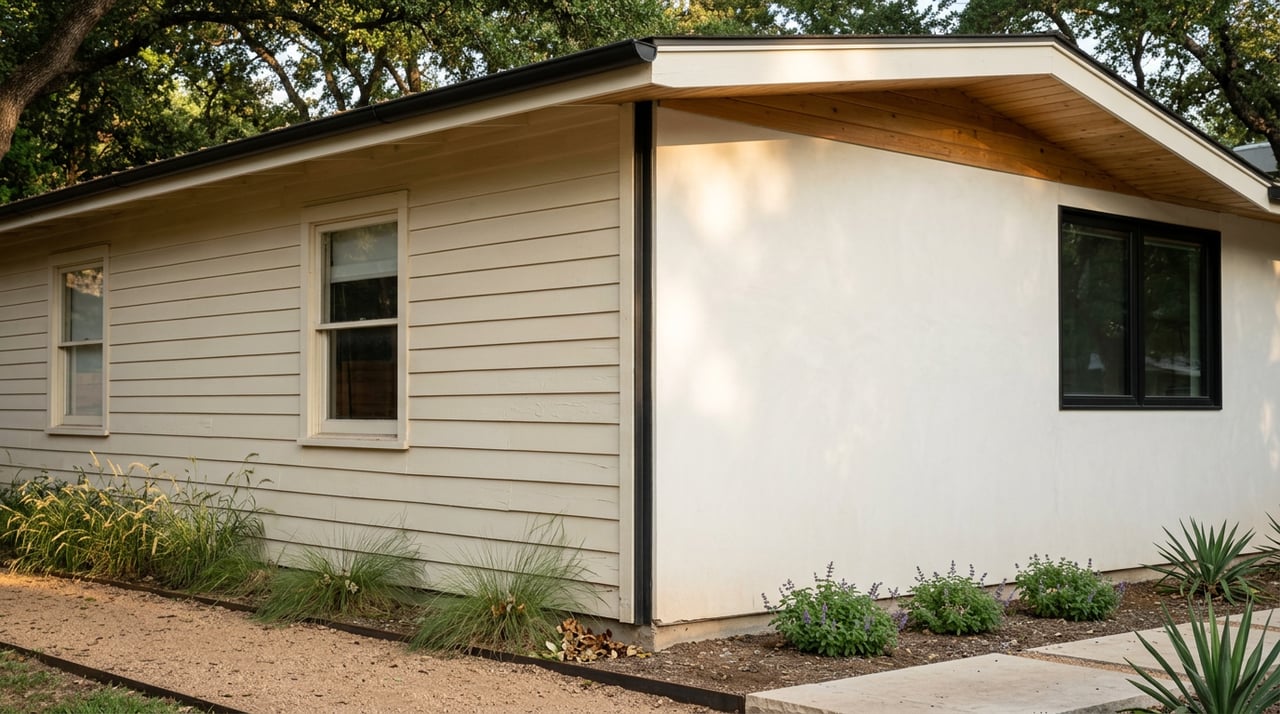
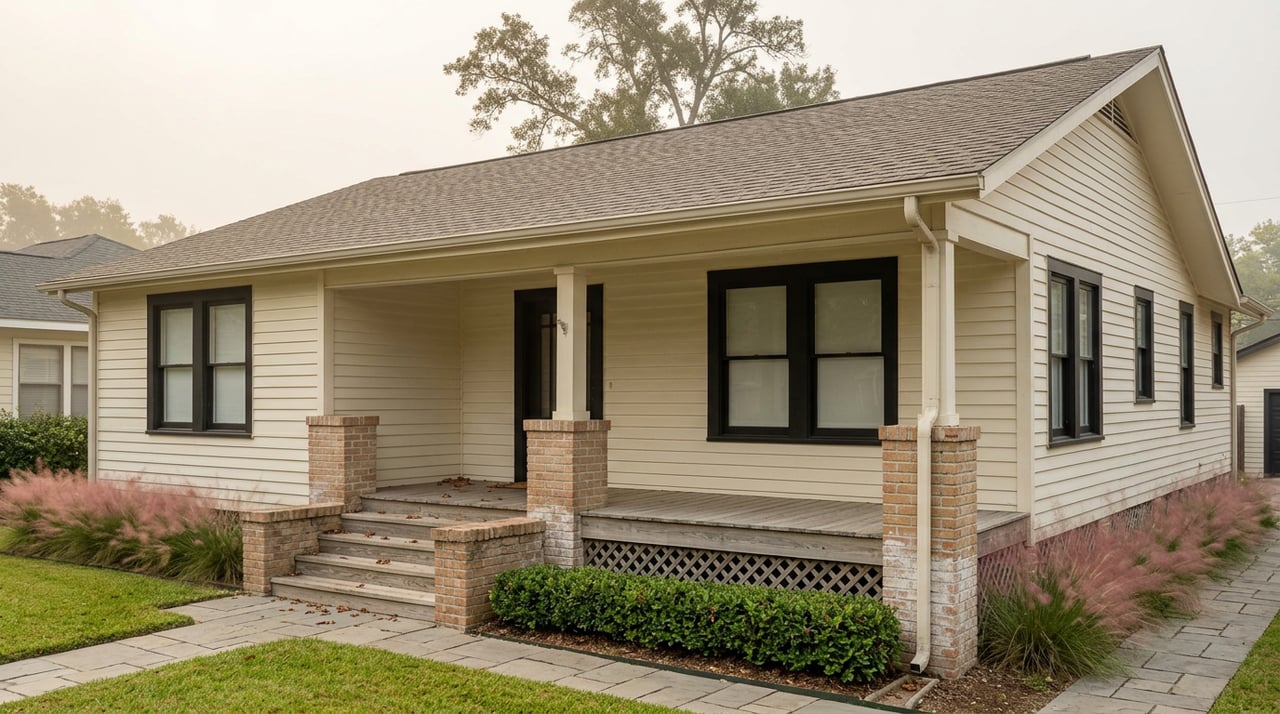
Austin Oyster Co., the raw bar pop-up, has opened its first brick-and-mortar in East Austin, showcasing oysters from its own farm in Brunswick, Maine, inside a renovated 1950s bungalow, with Chef de Cuisine Clark Costello, previously of Este and Suerte, running the kitchen. The choice to keep a residential envelope rather than gutting it into a warehouse room is why the place reads as a neighborhood spot instead of a destination. Small rooms, low ceilings, and a front-porch approach set the pace before the menu does.
A few blocks over, Konbini is a new late-night sushi counter tucked behind Papercut from Tare chefs Michael Carranza and Danielle Martinez, walk-in-only, serving a rotating menu of nigiri, sashimi, and crudos that blends Japanese technique with Texan and coastal Mexican influences. The design move here is worth reading closely: a counter tucked inside an existing bar's footprint doesn't need to solve for a hostess stand, a coat rack, or a private-event room. It solves for eight to twelve seats and a knife. That is why it can be walk-in only and stay open late without the overhead a stand-alone sushi restaurant would carry.
Oria, from the team behind Space Cowboy, is now open in the former Austin Eastciders space, centered on charcoal- and wood-fired cooking with a shareable menu influenced by Southern European and Eastern Mediterranean flavors, and includes a large patio, an outdoor pita oven, and an indoor dining room built around the live-fire kitchen. The old cider warehouse's ceiling height and existing patio infrastructure are what make a pita oven and a live-fire program feasible at that scale. The kitchen stays open until 2 a.m. on weekends, which quietly extends the neighborhood's dinner window in a way East Austin has been missing since a couple of late-night rooms closed.
Move north into the hotel corridor and the pattern shifts from reuse of individual buildings to reuse of an entire commercial spine.
The Poeta team announced they were closing their East Austin tasting menu restaurant in November, and are back in a new location at the East Austin Hotel with an a la carte menu. A tasting-menu operation moving into a hotel dining room with a la carte pricing is a structural change, not just a relocation. Hotel service load smooths out the weekday troughs that killed a lot of destination rooms during 2024 and 2025.
Over on East MLK, a new neighborhood spot for pizza, pasta, and wine is opening led by chef Emily Rayburn, Howdy's Pizza and Pasta, serving Italian-inspired dishes with Central Texas influence including tomato and peach agnolotti, corn and basil lasagna, pepperoni pizza with ricotta and basil, and a hot pepper, peach, and burrata pizza. The MLK corridor between the interstate and Chestnut has been slow to fill in compared to the East 6th and Cesar Chavez runs, and a neighborhood-priced pasta room is exactly the kind of block-anchor that pulls foot traffic off of the arterial and into the side streets.
Chef Laila Bazahm's Siti is a Southeast Asia-inspired restaurant in East Austin that highlights the influences of Singapore, Malaysia, Indonesia, Thailand, and the Philippines, with plated dishes like satays, spicy sambal striped bass, and 44 Farms' beef cheeks; Bazahm is also known for her Spanish restaurant El Raval. Two rooms from the same operator on the same side of town is a signal worth paying attention to. It usually precedes a third.
An old envelope forces a good operator to design for the room instead of the brand deck. That is why the East Austin openings feel more like places than concepts.
East End Ballroom, housed inside the Arlyn Studios recording facility, brings live music nights, DJ programming, cocktails, a supper club, and a Sunday brunch that feel as meticulously composed as the records made just down the hall. This is the reuse case that would be hardest to replicate in a new build. A room designed for tracking drums has an acoustic character that a hospitality architect would spend a small fortune trying to fake.
The northern edge of East Austin is where the reuse story turns into a broader building-stock story.
Strangelove Coffee & Wine is an East Side cafe that's equal parts art installation, wine bar, and caffeine haven. A coffee-plus-wine format only pencils in a room that can stretch a single lease across morning and evening dayparts, which is exactly what East Austin's older commercial storefronts on that stretch of Airport allow.
In Mueller, ThoroughFare, a new bakery, cafe, deli, and market from the team behind ThoroughBread, opened in March, functioning as both a casual stop for coffee, pastries, and breakfast, and a market where guests can pick up wine, tinned fish, and other provisions. Mueller is the one part of this map that is new construction rather than reuse, and it shows in how the store is programmed: wider aisles, more retail, a fuller market grid than any of the reused-envelope operators can pull off.
HOPE Outdoor Gallery has reopened, near the Austin airport, complete with outdoor park space, mural walls, a 6,000-square-foot gallery event space, a coffee bar, gift shop, and art supply store. If you moved to the east side after the original Castle Hill location closed, the reopening changes what a Saturday morning with kids can look like without leaving the neighborhood.
And the Bohème boutique hotel at 400 Comal is expected to pay homage to Austin's soul and heritage, with 20 unique rooms including 14 standard rooms and six signature suites like The Den, a suite inspired by Austin's music scene green rooms, and The Pearl, a suite depicting Janis Joplin's spirit. A 20-key hotel is small enough to be programmed like a house rather than a property, which is a different animal than the 150-room hotels that defined the corridor five years ago.
The reuse pattern isn't an aesthetic footnote. It changes how you use the neighborhood.
The through-line for anyone thinking about this neighborhood in terms of a house rather than a menu: the operators betting on East Austin this year are betting on its existing buildings. A 1950s bungalow is a raw bar. A recording studio is a supper club. A cider warehouse is a live-fire kitchen. That is a healthier signal for the durability of the housing stock and the streets it sits on than another round of teardowns would be.
If you own a bungalow in this part of town and have been weighing whether the character of the block is holding, the operators moving in this summer are effectively voting yes with their capex.
If you are thinking through what a house in East Austin can actually become, whether you already live here or are working out where a renovation or a new purchase fits, Ed Hughey is happy to walk a block with you and talk through what the envelope will and won't allow. Let's connect.
Stay up to date on the latest real estate trends.
Working with Ed means partnering with a real estate professional who brings a strategic, design-informed approach to buying and selling homes in Austin. As a licensed Realtor with a deep understanding of residential construction, renovation potential, and city code, Ed helps clients identify value, assess opportunities, and make confident, informed decisions in a competitive market. Known for clear communication, honest guidance, and strong negotiation, Ed is committed to protecting his clients’ interests while delivering a seamless, results-driven real estate experience from start to finish.