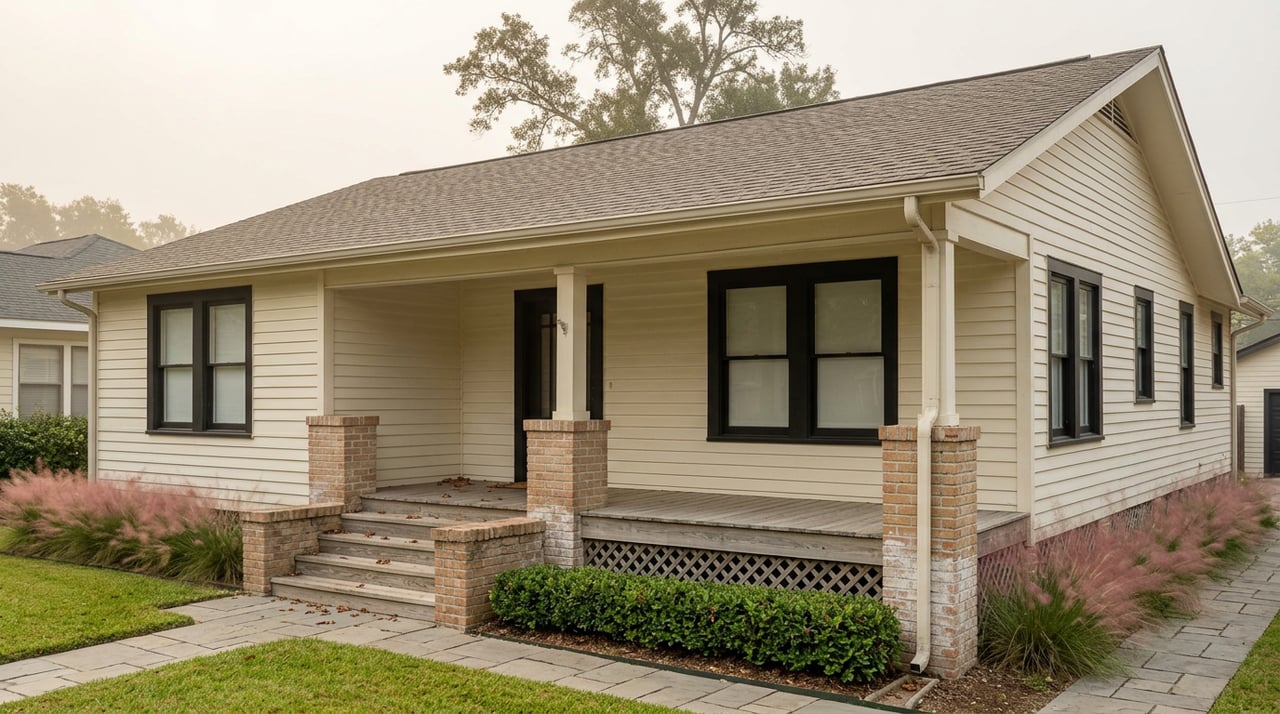
In East Austin, the Riskiest Word on a Disclosure Form Is "Unknown"
September 10, 2026
September 10, 2026
Buyers walking through a 1930s bungalow on the east side almost always ask the same question first: has the foundation been worked on? If the seller's disclosure says yes, with a repair date and a contractor's name attached, most buyers flinch. It reads like a confession. If the box says unknown, most buyers relax. No news is good news, or so the logic goes.
That logic is backward, and East Austin's building stock is exactly where it breaks down. A documented repair on a pier and beam bungalow is usually the safer house to buy. An honest "unknown" is often just that: honest, because nobody has looked under the floor in ninety years, not because there's nothing to find.
Texas sellers fill out a disclosure form, most commonly the TXR-1406 that Texas REALTORS circulate, built on top of the statutory minimum in Property Code Section 5.008. The form asks about foundation condition, plumbing, electrical, and prior repairs, and it asks about what the seller actually knows, not what a full investigation would have turned up. A seller who never had an engineer under the house has no obligation to hire one before signing. Marking "unknown" for a system nobody has inspected in decades is not evasive. It's accurate.
The legal exposure runs the other direction. Texas courts have consistently held sellers to their actual knowledge, and concealing a defect you did know about can support a fraud or Deceptive Trade Practices Act claim, with damages that can run three times the actual repair cost plus attorney's fees. That penalty structure gives a seller who already dealt with a foundation problem every reason to document it thoroughly rather than bury it. A "yes, repaired in 2019, engineer's letter attached" is the output of someone protecting themselves from that exposure. It is a managed condition with a paper trail, not a hidden one.
East Austin's older housing stock sits on Blackland Prairie clay, the same expansive soil that drives foundation design decisions across the eastern half of the city. Most bungalows built there from the 1920s through the 1940s went up on pier and beam foundations: concrete or cedar piers holding wood beams and floor joists over a crawl space. That system tolerates soil movement better than a rigid slab because it flexes, but nearly a century of drought and rain cycles still leaves marks. Common findings include cedar piers that have rotted, shims that have compressed or fallen out, and floors that bow toward the center of the house because the exterior piers held while the interior piers settled into softening clay.
None of that is unusual for a home this age. It's also not something a seller who bought the house in 2015 and never opened the crawl space would necessarily know about.
Here's a rough sense of what shows up, and what it costs to address, on East Austin's typical pre-1950s bungalow:
| System | Common era in East Austin | Typical 2026 fix range |
|---|---|---|
| Pier and beam foundation (cedar or concrete piers) | 1920s–1940s | $10,000–$30,000+ for engineer-directed pier replacement or beam reinforcement |
| Knob and tube wiring | Pre-1940 | $1,500–$4,000 for a 200-amp panel upgrade, plus per-circuit rewiring costs that vary by scope |
| Galvanized steel supply lines | 1920s–1960s | $4,000–$8,000 to repipe a 2,000 square foot house with PEX |
| Cast iron sewer line | 1950s–1980s, with an 80 to 100 year service life | $80–$250 per linear foot for trenchless replacement |
None of these numbers are alarming on their own. They're the ordinary cost of owning a home built before the systems inside it were expected to last a century. The point is that a seller's honest "unknown" checkbox tells you nothing about which of these conditions exist behind the walls. Only an inspection does that, and a pier and beam crawl space inspection in Austin typically runs $100 to $200 more than a standard slab inspection, precisely because someone has to physically get under the house.
A pier that has held steady for ninety years isn't proof nothing is wrong. It's proof the load path found its balance. The real question is whether the next renovation, or the next drought, changes that balance before anyone notices.
Think about the two sellers side by side. One had a foundation engineer out in 2019, got a report, paid for pier work, and kept the invoice and the warranty. Their disclosure says yes, with dates and a contractor name. The other has owned the house for six years, never had a reason to crawl underneath it, and honestly checked unknown.
The first house has a documented history you can verify. You can call the contractor, confirm the warranty transfers, and ask the city's Development Services Department whether a permit was pulled for the work, since Austin requires permits and engineering stamps for most pier and beam repairs. Residential permit review in Austin generally runs five to fifteen business days, so a legitimate repair usually left a paper trail somewhere in the public record.
The second house might be completely sound. It might also have the exact bowl-shaped floor sag and rotted cedar piers described above, just never diagnosed. Unknown isn't a red flag. It's an absence of information, and on a bungalow this age, that absence should prompt a more thorough inspection, not a more relaxed one.
If you're under contract on an East Austin bungalow and the disclosure shows a prior repair, request the documentation before you decide it's a problem:
If the disclosure shows unknown, treat that as license to look harder, not less. Order the pier and beam crawl space inspection, ask for a sewer scope on the cast iron line if the house was built before 1980, and budget the $175 to $250 that adds to the inspection cost. It's a small fraction of what a surprise repair costs after closing.
Walk one lot over on many East Austin streets and you'll find infill construction built on an engineered post-tension slab instead of pier and beam. That system resists the same expansive clay by putting the concrete under compression with tensioned steel cables rather than letting the structure flex. It handles Blackland clay differently, and it fails differently too. Post-tension problems tend to trace back to cables that weren't tensioned to spec or drainage that changed after construction, not rotted cedar piers or century-old shims.
That means two houses on the same East Austin block, built eighty years apart, are carrying genuinely different foundation risk profiles even though they sit on identical soil. A disclosure form that says "unknown" means something different on each. On the bungalow, it likely means nobody has looked. On the five-year-old infill build, it more often means there's simply nothing yet to report.
If you're evaluating a bungalow purchase or getting one ready to list in East Austin this season, the disclosure form is a starting point, not a verdict. A documented repair with an engineer's letter and a permit number is a house whose problem has already been solved and proven. An honest unknown on a ninety-year-old pier and beam system just means it's your turn to find out what's there.
That's the kind of read a design background and a construction eye are built for: separating a documented fix from a genuine unknown, and knowing which one actually costs you more at the negotiating table.
If you're weighing a bungalow purchase, a listing, or a renovation on East Austin's older housing stock and want a second set of eyes on what a disclosure form or inspection report is really telling you, Ed Hughey combines a registered architect's read on construction with local market strategy. Let's Connect.
Stay up to date on the latest real estate trends.

Working with Ed means partnering with a real estate professional who brings a strategic, design-informed approach to buying and selling homes in Austin. As a licensed Realtor with a deep understanding of residential construction, renovation potential, and city code, Ed helps clients identify value, assess opportunities, and make confident, informed decisions in a competitive market. Known for clear communication, honest guidance, and strong negotiation, Ed is committed to protecting his clients’ interests while delivering a seamless, results-driven real estate experience from start to finish.