Crestview and Allandale Got the Same Zoning Upgrade. Only One Neighborhood Is Using It.
September 3, 2026
September 3, 2026
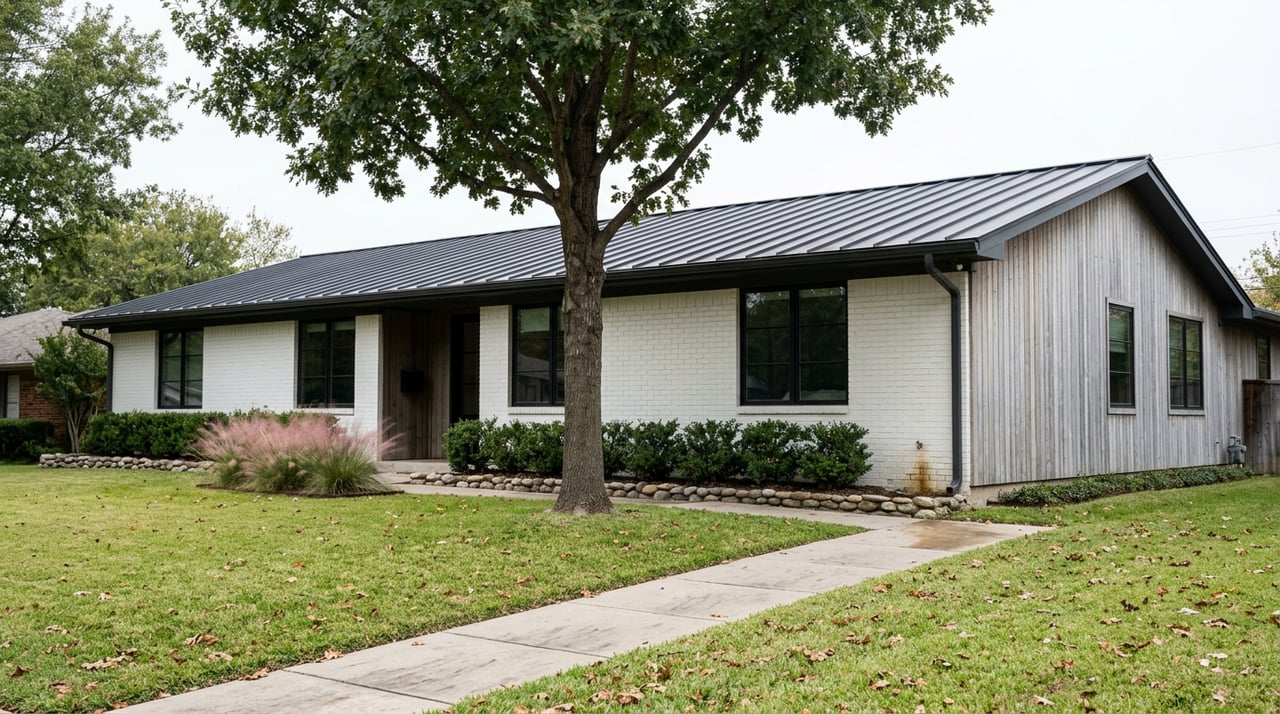
A buyer runs the numbers on two 1950s ranch homes, one in Crestview, one in Allandale, both on lots just under 8,000 square feet, both a short walk to the same Burnet Road corridor. Pull up the City of Austin's zoning map and the story looks identical: since 2024, both lots qualify for up to three residential units under the city's HOME ordinance. Same era, same underlying zoning category treatment, same theoretical upside.
Then the buyer tries to actually build the second unit. In Crestview, a title search turns up nothing that blocks it. In Allandale, the same search turns up a decades-old deed restriction limiting the parcel to a single dwelling, one the neighborhood association has spent 45 years defending in exactly this situation. Same city code. Two completely different answers.
Austin's HOME initiative rewrote the density rules for the majority of the city's residential land in two steps. Phase 1, adopted by City Council on December 7, 2023, allowed up to three housing units on lots zoned SF-1, SF-2, or SF-3, the three single-family categories that cover most of Austin. Phase 2, adopted May 16, 2024 and applied citywide by November 16, 2024, went further, creating a small-lot single-family category and dropping the minimum lot size for some configurations to as small as 1,800 square feet.
The point of listing both phases by category is that the ordinance doesn't distinguish between SF-2 and SF-3 in any way that matters for unit count. A lot zoned SF-2, historically the more restrictive of the two, gets the same three-unit allowance as a lot zoned SF-3. If city zoning were the whole story, the density gap between a neighborhood built on SF-2 and one built on SF-3 should have narrowed to nothing over the past two years.
It hasn't. And the reason sits one layer beneath the zoning map, in paperwork that predates HOME by more than four decades.
| Crestview | Allandale | |
|---|---|---|
| Base zoning | Largely SF-3 | Largely SF-2 |
| Zoning origin | 2005 Transit-Oriented Development ordinance built to mandate density near the Crestview MetroRail station | 1981 zoning rollback, matched to existing single-family deed restrictions |
| 2026 price band | Median in the high $500,000s to $650,000, per-square-foot in the $445 to $476 range as of June and July 2026 | Typically mid-$500,000s to $1.2 million or more as of June 2026 |
| Lot character | Smaller, variable, includes small-lot infill and townhome product | 7,000 to 9,000 square feet average |
| Practical HOME effect | Duplexes and small-lot triplexes are being built and marketed | Deed restrictions frequently override the city's three-unit allowance |
Allandale's low density isn't an accident of geography. It's the result of a deliberate campaign. In 1981, the Allandale Neighborhood Association pushed for a zoning rollback specifically to match the city's zoning designation to the private deed restrictions already recorded on most of the neighborhood's subdivisions, restrictions that limited development to single-family use. Austin City Council approved the rollback 6-1 under Mayor Carole McClellan, and it remains the largest zoning rollback in the city's history. That vote is why much of Allandale's interior carries SF-2 zoning today.
The neighborhood association didn't stop advocating once the rollback passed. In 2008, when the city considered vertical mixed-use zoning along Burnet Road, Allandale successfully pushed the Planning Commission to exclude shallow lots and cluster any new density around two specific nodes, Anderson at Burnet and North Loop at Burnet, rather than allowing it along the corridor generally. The neighborhood's stated reasoning, according to reporting at the time, was that mixed-use development would raise land values on Burnet Road while lowering desirability in the residential blocks behind it.
That same instinct resurfaced when HOME passed. Coverage of the ordinance's aftermath describes Allandale Neighborhood Association residents raising the same concerns in 2025 that their predecessors raised over the church property dispute decades earlier, namely that deed restrictions, not city zoning, are what actually protect the neighborhood's character, and that those restrictions require active enforcement to mean anything.
The mechanism to remember: when a zoning ordinance and a private deed restriction cover the same parcel, the more restrictive of the two controls. A city that allows three units on a lot cannot override a subdivision covenant that allows one.
Crestview's zoning history runs in the other direction entirely. After Austin voters approved the Leander-to-downtown commuter rail line in 2004, the City Council directed staff to create Transit-Oriented Development zones around the coming MetroRail stops, with the explicit goal of mandating higher-density, mixed-use development near stations rather than merely permitting it. Council adopted that ordinance in May 2005, and Crestview Station, at the corner of Airport Boulevard and North Lamar, became one of the largest of those zones.
The private developers behind the station, Trammell Crow and Stratus Properties, built out Midtown Commons, a mixed-use project with more than 300 residential units on the former site of a Huntsman Petroleum research facility. The neighborhood's zoning, largely SF-3 outside the TOD footprint itself, never underwent anything resembling Allandale's rollback. And Project Connect's planning has flagged a future extension of Blue and Orange Line service to Crestview station, which would only strengthen the transit case for the area.
Layer HOME on top of that history and the two neighborhoods diverge further rather than converge. A duplex or triplex project in Crestview isn't fighting a deed restriction the neighborhood association has spent generations defending. It's building on top of a zoning tradition that was designed, from the start, to accommodate exactly this kind of density.
HOME did remove one real obstacle for multi-unit projects in both neighborhoods. Subchapter F, Austin's design-and-massing code commonly called the McMansion ordinance, is waived for duplex, two-unit, and three-unit residential uses, but remains fully in force for single-family custom homes. That waiver matters because Subchapter F's floor-area-ratio cap and sloped height planes are the main constraint pushing custom home buyers toward larger, more expensive single-family construction rather than splitting a lot into smaller units. Remove that constraint for multi-unit projects and the economics of a duplex conversion improve regardless of which neighborhood the lot sits in.
What HOME did not touch, and cannot touch by design, is private deed restriction. City code sets a floor. Deed restrictions, where they exist and where a homeowners association is willing to enforce them, set the actual ceiling. That's the layer HOME's citywide language skips past, and it's the layer that explains why Crestview's SF-3 zoning is translating into built product while Allandale's SF-2 lots, now theoretically HOME-eligible, mostly aren't.
As of June and July 2026, Crestview's median sale price runs in the high $500,000s to $650,000, with price per square foot in the $445 to $476 range and a typical sale closing in around 42 days. Allandale's price band as of June 2026 runs from the mid-$500,000s for an original, unrenovated 1950s ranch up to $1.2 million or more for a renovated or new-build property on one of the neighborhood's larger lots.
Crestview's own numbers hint at the same split happening inside a single zip code. The neighborhood's June 2026 average sale price ran well above its median, a gap that tracks with a market where an original 1950s bungalow and a new-build duplex on a subdivided lot can sell within blocks of each other for very different reasons.
The easy explanation for the Crestview-Allandale gap is Allandale's larger lots, mature oak canopy, and zoning to Gullett and Doss elementary schools, both consistently rated among the district's highest. All of that is real. But it isn't the whole explanation, and treating it as the whole explanation causes buyers to misprice what they're actually purchasing.
Part of Allandale's premium is the neighborhood's track record of defending low density against exactly the kind of citywide upzoning HOME represents. A buyer paying up for Allandale is paying, in part, for a functioning deed-restriction enforcement mechanism that has survived a 1981 zoning fight, a 2008 corridor zoning fight, and the 2023-2024 HOME ordinance intact. Crestview's lower price reflects the opposite condition: a neighborhood whose zoning history was built to invite the density that HOME now makes easier everywhere, meaning any given lot's redevelopment upside is closer to being realized rather than held in reserve.
If you're pricing a Crestview or Allandale property based on its multi-unit potential, the city's zoning designation is a starting point, not an answer. The steps that actually matter:
Pull the deed history on the specific parcel, not the neighborhood generally. Allandale's restrictions vary by subdivision within the neighborhood, since different sections were platted by different developers between the late 1940s and 1958.
Check whether the lot sits inside Crestview's original 2005 Transit-Oriented Development boundary, since development standards there differ from the surrounding SF-3 blocks.
Ask whether a homeowners association exists on the specific street and whether it has a documented history of enforcement. A restriction nobody enforces functions differently than one an association has defended in front of the Planning Commission.
Weigh Travis Central Appraisal District's land value component on the parcel. In Allandale, land value has come to represent the majority of assessed value on many parcels over the past decade, a signal of how much of the price is tied to the dirt rather than the structure sitting on it, and worth checking on a Crestview parcel too before assuming the house is what you're paying for.
Does the HOME ordinance override my HOA or deed restrictions? No. City zoning sets what's allowed under the Land Development Code. Private deed restrictions and HOA covenants are separate legal instruments, and where the two conflict, the more restrictive one controls.
Is all of Crestview zoned SF-3? The majority of the neighborhood is, though the original Transit-Oriented Development zone around Crestview Station carries its own standards separate from the surrounding SF-3 blocks. Confirm the parcel-specific zoning with the city's GIS Property Profile tool before underwriting a project.
Could Allandale loosen its deed restrictions eventually? Deed restrictions can be amended, but typically require a supermajority of property owners within the specific subdivision to agree, which is a much higher bar than a City Council zoning vote. The neighborhood association's history suggests that bar is unlikely to be cleared soon.
How do I check a property's deed restrictions before I make an offer? A title company can usually pull recorded restrictions within 24 hours. Do this before spending money on architectural drawings or a site plan, not after.
This is exactly the kind of question that looks like a zoning question until you're three weeks into a project and it turns out to be a title question. If you're comparing a Crestview lot against an Allandale lot and trying to figure out which one actually supports the project you have in mind, that's a conversation worth having before you write an offer, not after.
Ed Hughey combines a Texas architect's license with day-to-day Austin brokerage work, which means the zoning conversation and the deed-restriction conversation happen at the same table. Let's Connect if you're weighing a lot in North Central Austin and want a clear read on what it can actually support.
Stay up to date on the latest real estate trends.
Working with Ed means partnering with a real estate professional who brings a strategic, design-informed approach to buying and selling homes in Austin. As a licensed Realtor with a deep understanding of residential construction, renovation potential, and city code, Ed helps clients identify value, assess opportunities, and make confident, informed decisions in a competitive market. Known for clear communication, honest guidance, and strong negotiation, Ed is committed to protecting his clients’ interests while delivering a seamless, results-driven real estate experience from start to finish.