Downtown Austin Condo Reserve Fund Due Diligence Guide
August 20, 2026
August 20, 2026
Picture two one-bedroom condos downtown, listed within a few dollars per square foot of each other, HOA dues close enough that a spreadsheet would call them a wash. Which one is the better deal?
The honest answer isn't in either listing sheet. It's in the permit records. One of these buildings opened in 2010. The other opened in 2019, or maybe last year. That nine-to-fifteen-year gap in construction date matters more to your future costs than the four-figure difference in list price, and almost nobody touring these units is asking about it.
Most condo-buying advice in this market converges on the same instruction: check the reserve fund before you write an offer. It's good advice as far as it goes. CondoSignal explains that Texas law requires a condominium association to disclose its current reserve balance in the resale certificate issued at the time of sale, along with any pending special assessments and the current operating budget. PropFusion explains that Texas law does not set a floor: there's no statutory minimum reserve balance in Texas and no mandated reserve-study schedule. The disclosure exists. The adequacy of what's disclosed is left entirely to the association's board and, by extension, to how carefully you read it.
A newer state law sharpens the disclosure without touching that gap. Senate Bill 711, effective September 1, 2025, requires condo associations with 60 or more units, or any association using a contracted management company, to post their governing documents online. It also moved up the deadline for associations to electronically file management certificates with the Texas Real Estate Commission, with certificates recorded before the law's effective date due by March 1, 2026. That's a real improvement in access. You can now find a building's declaration and bylaws without chasing down a management company by phone. But a well-organized website with a thin reserve fund is still a thin reserve fund. SB 711 makes the paperwork easier to find. It does nothing to tell you whether the number on the page is enough.
Here's the part a reserve balance alone won't show you. Major building systems in a high-rise condo follow their own replacement schedules, and those schedules run on decades, not on renovation cycles or market conditions. Elevator modernization, curtain-wall resealing, waterproofing at the podium and roof level, and pool equipment replacement all have a useful life, and industry practice for reserve planning recommends a full study every three to five years precisely because those numbers need to be refreshed as buildings age into different phases of that life. A reserve balance can look current on the day you read it and still miss a five- or six-figure line item that's arriving in the next capital cycle. The building's age tells you which chapter you're reading, and that's information the balance sheet doesn't organize for you.
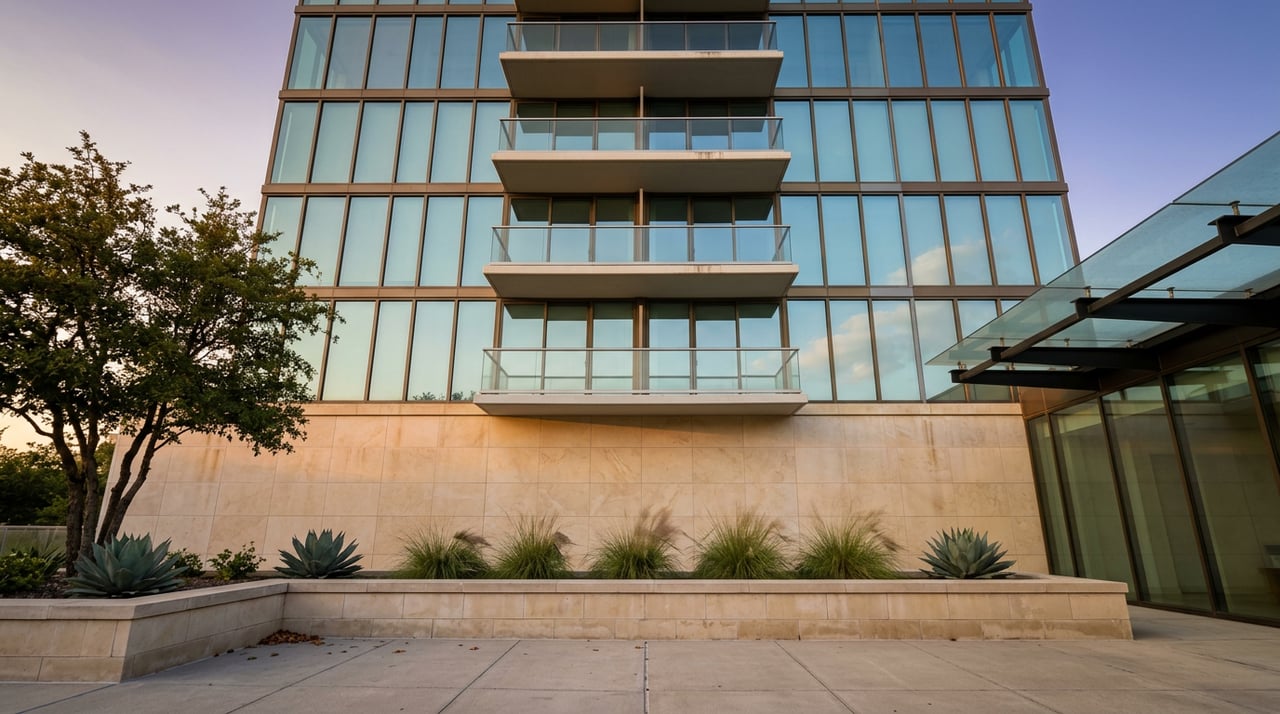
Downtown Austin's condo towers span a wide enough range of construction dates to make this concrete. The Austonian and the Four Seasons Residences both opened in 2010, putting them at sixteen years old this year, right around the window where major vertical-transportation and envelope work commonly shows up on a reserve study for the first time. Seaholm Residences, a 30-story, 280-unit tower in the Seaholm District, was completed in 2016, a decade past its original construction warranties. The Independent, at 58 floors and 363 units, opened in 2019 and still carries most of its original mechanical and vertical-transport systems within their expected useful life. The Modern Austin Residences, a 319-unit tower that reached substantial completion in 2025, has almost no multi-year financial track record yet at all.
That last building is worth sitting with. A brand-new tower isn't automatically the safer buy just because it has no assessment history. It has no assessment history because it hasn't existed long enough to generate one. The diligence question there isn't "how healthy is the reserve fund," it's "what assumptions is the initial capital budget making, and who built them."
| Building | Year Delivered | Where It Sits on the Capital Clock | What to Ask For |
|---|---|---|---|
| The Austonian, Four Seasons Residences | 2010 | Entering the window where elevator modernization and facade resealing typically land on reserve studies | The full reserve study, not just the balance, and the documented age of major mechanical and vertical-transport systems |
| Seaholm Residences | 2016 | A decade in, past original construction warranties | Roof, waterproofing, and pool-equipment replacement schedule |
| The Independent | 2019 | Mid-life, most original systems still within useful life | Confirmation of builder warranty follow-through and any known envelope or facade issues |
| The Modern Austin Residences | 2025 | Pre-history, no multi-year track record | The initial capital budget assumptions and the reserve funding methodology, since there's no track record to check instead |
Downtown's condo market has been softening in a way that rewards exactly the wrong kind of shortcut. As of March 2026, citywide condo inventory reached roughly 8.8 months of supply, the longest stretch since the 2010s, and the 226 active listings downtown at that time were averaging around 127 days on market. Close to 41 percent of active condo listings citywide carried at least one price reduction, averaging about an 8 percent cut, and condo prices overall were running 6.5 to 8.5 percent below year-ago levels, with medians in the high $300,000s, while single-family home prices held closer to the mid $500,000s.
That gap is genuinely attractive if you're priced out of a house. It's also exactly the kind of market where a discount can mean two very different things. A price cut on a well-run building might just reflect a soft market. A price cut on an older tower with real capital exposure coming due might reflect other buyers, or their agents, already having done the reserve-study math you haven't done yet. Days on market and price cuts don't distinguish between those two stories. Only the documents do.
Financing adds another layer worth knowing before you fall for a number. Roughly 51 condo projects in Austin currently carry FHA approval, and lender project reviews weigh reserve health, owner-occupancy ratios, and delinquency rates alongside your personal file. A building with a thin reserve fund risks losing that approval status entirely, which shrinks your buyer pool and your resale market at the same time, regardless of what your own reserve study shows for your specific unit.
Before you write an offer, request the resale certificate the association is required to provide, which should include the current reserve balance, any pending special assessments, the operating budget. Then go further than most buyers do. Ask for the reserve study itself, not the summary line, and read what it says about the age and remaining life of the roof, the elevators, the facade sealant, and the pool mechanical systems specifically. Request the last twelve to twenty-four months of board meeting minutes, which is where a slow-motion capital problem usually shows up first, long before it becomes a special assessment notice. Review the master insurance declarations and confirm who absorbs the deductible if there's a claim, since that allocation varies by governing document and can turn a modest claim into a real bill for owners.
A reserve balance tells you how much money is sitting in an account today. It doesn't tell you what that account is about to be asked to cover, or when. That's the read an architect brings to the table that a spreadsheet alone won't: matching the building's actual age and system inventory against what the reserve study says is coming, rather than trusting that a healthy-looking number means a healthy building.
Natiivo Austin remains the clearest example of a building actually built around that use case. Confirm a building's rental and leasing restrictions in the governing documents before you assume any income scenario, not after.
Does SB 711 apply to every downtown building? Only if the association has 60 or more units or has contracted with a management company. Some of downtown's smaller boutique buildings fall outside that online-publication requirement, though the underlying resale-certificate disclosures under state law still apply to all of them.
What counts as a healthy reserve fund in Texas, if there's no legal minimum? There's no statutory number to check against. Lenders and industry practice generally look for a reserve study updated within the last three to five years and funding levels that support the building's actual capital plan rather than a fixed percentage. The study itself, read against the building's age and systems, tells you far more than the balance alone.
Buying downtown means buying into a building's future maintenance schedule as much as its current finish level. If you want a second set of eyes on a reserve study, or a straight read on where a specific tower sits on its capital clock before you write an offer, Ed Hughey combines a registered architect's eye with local transaction experience to help you see what the paperwork is actually telling you. Let's Connect.
This article is general information, not legal, tax or financial advice. Consult a qualified professional about your situation.
Stay up to date on the latest real estate trends.
Working with Ed means partnering with a real estate professional who brings a strategic, design-informed approach to buying and selling homes in Austin. As a licensed Realtor with a deep understanding of residential construction, renovation potential, and city code, Ed helps clients identify value, assess opportunities, and make confident, informed decisions in a competitive market. Known for clear communication, honest guidance, and strong negotiation, Ed is committed to protecting his clients’ interests while delivering a seamless, results-driven real estate experience from start to finish.