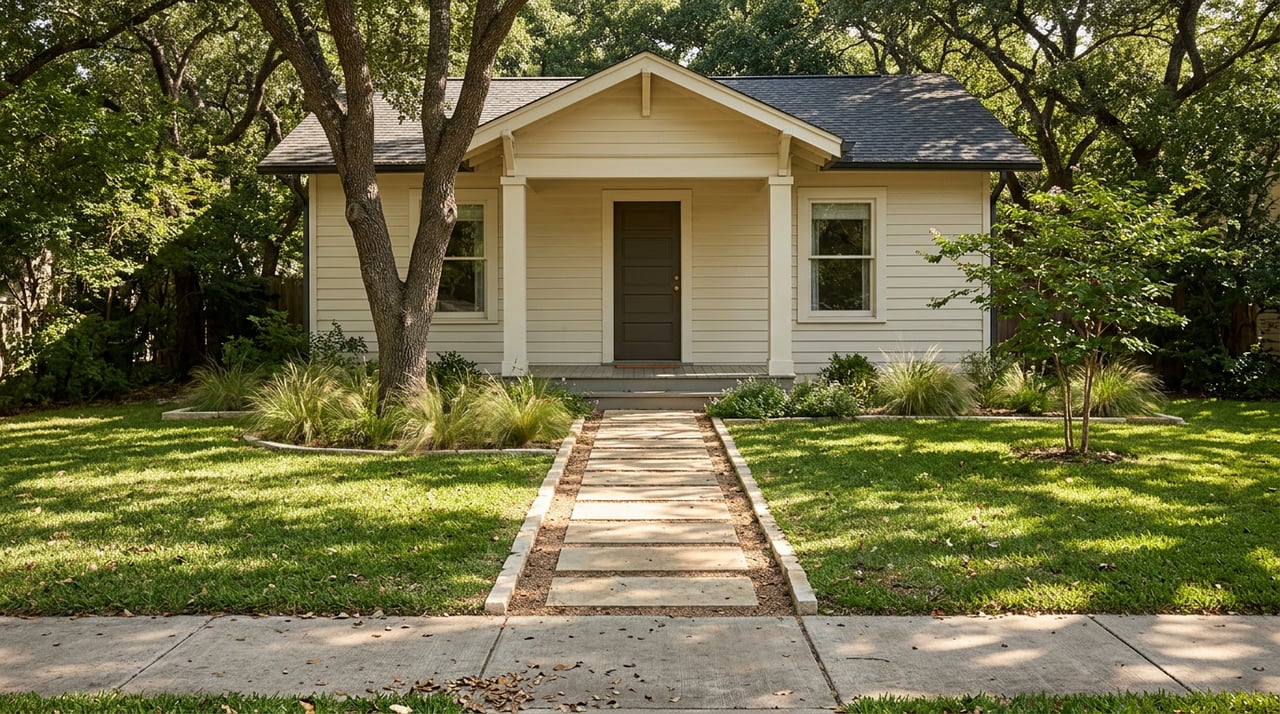
Why Hyde Park and Rosedale Austin Home Prices Differ
July 9, 2026
July 9, 2026
Open a portal search for Central Austin and Hyde Park and Rosedale sit next to each other in the results, share a ZIP-adjacent map pin, and get lumped into the same "78751/78756 walkable bungalow belt" story. Buyers assume the price gap between them is a matter of taste, tree cover, or which coffee shop is closer.
It isn't. In Hyde Park you are buying a regulated structure. In Rosedale you are buying a lot. Every other difference in price, days on market, renovation scope, and resale strategy flows from that one distinction.
A comp report will show you that Hyde Park's 2026 median has been anchoring the under-$900K central-north segment while Rosedale medians run above $1M and reach past $2M on redeveloped lots. Both neighborhoods are walkable to the University of Texas, both are dense with pre-war bungalows, both draw the same buyer profile on paper.
The difference is what the buyer is legally allowed to do next.
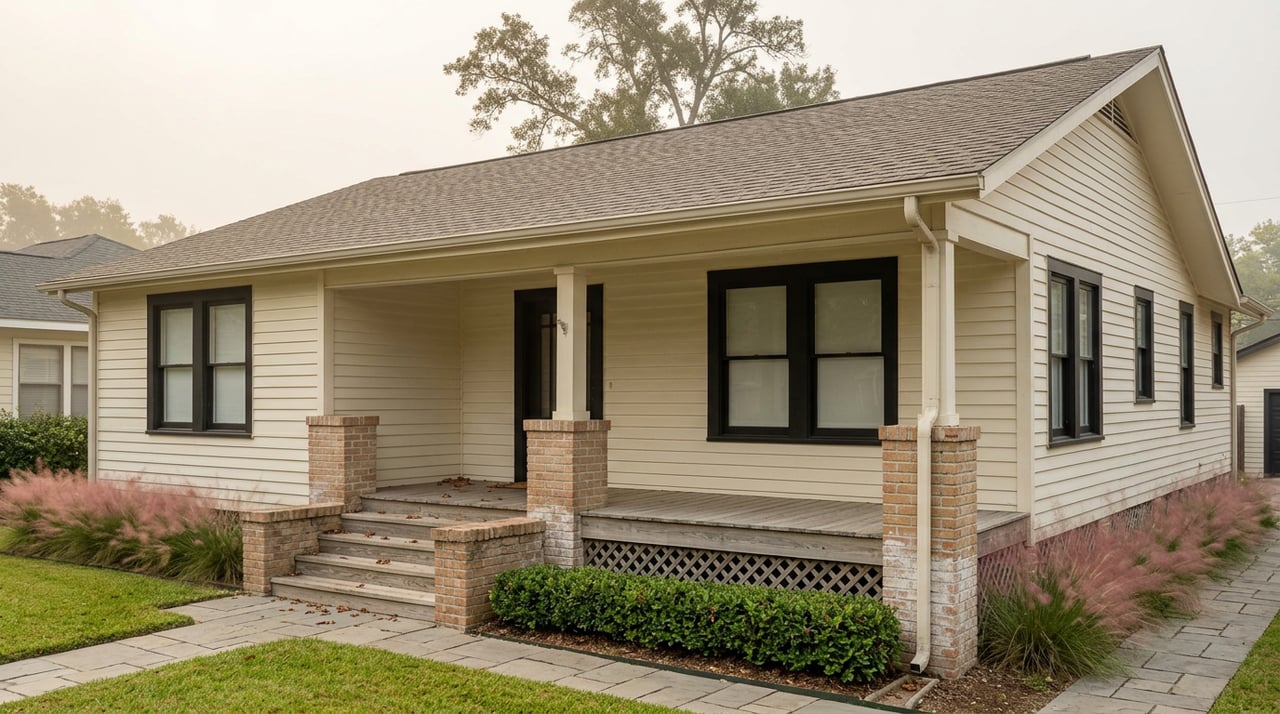
Hyde Park south of 45th Street sits inside the Hyde Park Local Historic District, which took effect December 26, 2010. About 75% of the structures inside those boundaries are classified as contributing, and exterior changes to a contributing house require a Certificate of Appropriateness from the Historic Landmark Commission before the City of Austin will issue a building permit. Layered underneath that is the Hyde Park Neighborhood Conservation Combining District, adopted in 2002, which caps building height at 30 feet rather than the citywide 35 feet, prohibits front-facing garages, and generally zones the interior of the neighborhood SF3. North of 45th Street the North Hyde Park NCCD does similar work under its own 2005 ordinance.
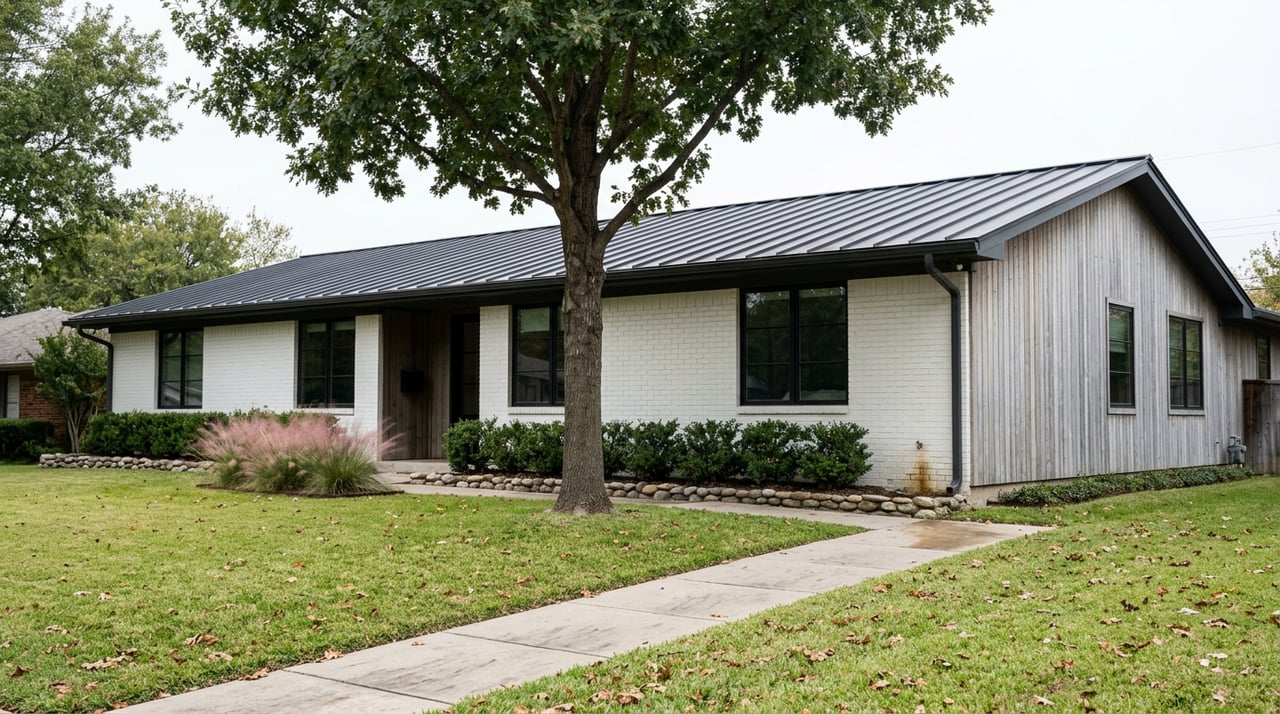
Rosedale has none of that. No LHD, no NCCD, no design review, no certificate. A contractor can pull a demolition permit on a 1940s cottage and start a new-build the same quarter.
That is the entire pricing story compressed into one sentence.
| Hyde Park (south of 45th) | Rosedale | |
|---|---|---|
| Local Historic District | Yes, effective Dec 2010 | No |
| Contributing structures | ~75% of buildings | N/A |
| Exterior review before permit | Required for contributing homes | Not required |
| Height cap | 30 ft under NCCD | 35 ft citywide |
| Typical lot size | Varies, many 5,500–7,500 sf | Cluster around 6,200–6,800 sf |
| Two units on one lot | 7,000 sf minimum under NCCD | Standard citywide rules |
| Market behavior | House-priced | Land-priced |
The Historic Preservation Office reviews window replacements, door replacements, roofing material changes, additions, and any new construction inside the district. Routine interior remodeling and basic maintenance do not require a certificate, but the moment the work touches the envelope, the timeline extends and the material palette narrows.
For a buyer, that changes the underwriting in specific ways:
None of this makes Hyde Park a worse buy. It makes it a different one. The premium a buyer pays inside the LHD is for the fact that the block will still look like the block in fifteen years. The discount, relative to Rosedale, is the value of the optionality the buyer is giving up.
Pull up any active Rosedale listing set and count the phrases: "value in land," "property considered a tear down," "expansive lot," "development opportunity," "endless possibilities." A quarter of what looks like a housing market in Rosedale is really a lot market with a structure attached.
That framing explains several things a portal median cannot:
The days-on-market number in Rosedale is longer than a hot Central Austin bungalow story would predict, running in the 70 to 85 day range through spring 2026. Land buyers underwrite carefully. They pull TCAD records, they estimate demo and site work, they price the build separately, and they do not compete on emotion. That mechanic is different from a family choosing between two move-in-ready homes, and it takes longer to close.
The spread of sold prices is wide. A 1950s Rosedale cottage on a 6,400 square foot lot and a 2022 new build on the same street can trade $1M apart, and both are "the Rosedale median" depending on which twelve months you measure. Realtor-tracked medians for Rosedale in early 2026 ran from roughly $860K on the Zillow home value index to about $1.15M on the Homes.com snapshot, with Redfin's April 2026 figure at $1,042,113. The range is not noise. It is the market pricing lots and finished houses inside the same postal geography.
Property tax adds another layer. The blended rate on a Rosedale parcel was 2.0465% for the 2025 tax year, up from 1.9818% the year before. On a $1.1M valuation that is a meaningful annual carry, and it disciplines what a rehab-plus-hold investor will pay for the underlying dirt.
Central Texas is a balanced-to-buyer-leaning market this summer. The metro carried 17,303 active listings the week of June 17, 2026, and 52.2% of active listings had already cut price at least once before receiving a contract. The sellers-per-buyer ratio sat at 2.8. Freddie Mac's 30-year fixed averaged about 6.53% in late May 2026.
When more than half the active listings in a metro have already blinked on price, sellers are competing for a smaller pool of buyers. The neighborhoods that hold their ceiling in that environment are the ones where scarcity is protected by something structural.
Hyde Park's scarcity is protected by the LHD. You cannot manufacture more contributing 1910 bungalows on 43rd Street. Rosedale's scarcity is protected by lot geometry and heritage tree cover, but the ceiling is a moving target because the ceiling is a builder's pro forma. When rates sit at 6.5% and buyer leverage is real, Rosedale's ceiling compresses faster than Hyde Park's floor.
That is the working thesis. Two Central Austin neighborhoods, one anchored by regulation and one anchored by land, respond to a cooling market at different speeds and in different directions.
For a buyer planning to add square footage or a second unit, the divergence is sharp.
Under the Hyde Park NCCD, building a second residential unit on a single lot inside the neighborhood requires a minimum 7,000 square foot parcel, a threshold reported by KUT in its coverage of the district's zoning debate. Many Hyde Park lots come in under that number, which forecloses the ADU conversation entirely on a fair share of the housing stock. Where the lot does clear 7,000 square feet, the design review process still governs exterior compatibility on the primary house.
Rosedale carries the same citywide ADU allowances as the rest of Austin without an overlay narrowing them, and its typical 6,200 to 6,800 square foot lots, with occasional parcels in the 8,000 to 15,000 range, give a renovation-minded buyer more room to work. The tradeoff is that the buyer next door has the same latitude, and a modern three-story infill can go up across the street inside the citywide 35-foot envelope.
Practically, that means:
Both neighborhoods share a lot on the lifestyle side: Ramsey Park and Ramsey Pool, the Shoal Creek Greenbelt running roughly 3.25 miles along the western edge of Rosedale, Central Market on North Lamar, Upper Crust Bakery on Burnet, the Elisabet Ney Museum, Shipe Park, Avenue B Grocery in operation since 1909, Austin Fire Station No. 9. These amenities are not what separate the price bands. They are what makes the whole corridor desirable in the first place.
The pricing separation is regulatory, and it lives one layer below the portal.
Are all of Hyde Park's rules the same across the neighborhood? No. The Local Historic District applies mostly south of 45th Street. North Hyde Park, north of 45th, is governed by a separate NCCD adopted in 2005 with different specifics. The HPNA planning and zoning page maintains the current boundary map and ordinance list.
Does buying a non-contributing house inside the Hyde Park LHD skip the review? Largely, yes. Approximately 25% of structures inside the district are non-contributing, and the LHD design standards do not apply to them the same way. NCCD rules on height, setback, and coverage still apply.
Should I read Rosedale's higher median as a signal that it is the stronger buy? Not necessarily. A higher median in a land-priced neighborhood means the average parcel has more redevelopment optionality baked into the price. A lower median inside an LHD means you are paying less for the house because you are paying less for the right to change it. Which is the better buy depends on what you plan to do with the property.
How much does the Historic Landmark Commission process add to a project? Timelines vary by scope, but a Certificate of Appropriateness for meaningful exterior work commonly adds weeks to a permit path and can require design revisions. The Historic Preservation Office publishes current review procedures and application forms.
If you are weighing a Central Austin purchase and want a pre-offer read on which side of this line a specific property actually sits, and what it means for renovation scope, resale, or ADU feasibility, that is the conversation I have most weeks. Reach out through Ed Hughey and let's connect.
Stay up to date on the latest real estate trends.
Working with Ed means partnering with a real estate professional who brings a strategic, design-informed approach to buying and selling homes in Austin. As a licensed Realtor with a deep understanding of residential construction, renovation potential, and city code, Ed helps clients identify value, assess opportunities, and make confident, informed decisions in a competitive market. Known for clear communication, honest guidance, and strong negotiation, Ed is committed to protecting his clients’ interests while delivering a seamless, results-driven real estate experience from start to finish.