How To Evaluate Downtown Austin Condo Buildings Like A Pro
May 28, 2026
May 28, 2026
If you have toured a few Downtown Austin condos and felt like they all blur together, you are not alone. In this market, the address matters, but the building itself often matters just as much. When inventory is growing and towers can differ widely in age, design, and operating history, you need a sharper way to compare your options. This guide will help you evaluate Downtown Austin condo buildings like a pro, with a focus on layout, light, privacy, amenities, HOA health, insurance, and financing. Let’s dive in.
Downtown Austin is not a one-size-fits-all condo market. According to the Downtown Austin Alliance, the condo market added 550 units since 2024, which represents a 14% increase in inventory, and six projects totaling 2.94 million square feet were under construction in 2026.
For you as a buyer, that means two buildings a few blocks apart may have very different risk and value profiles. One may have years of operating history and stable maintenance patterns, while another may still be working through early budget, reserve, or warranty issues. Comparing condos by price per square foot alone can miss what really affects day-to-day livability and long-term ownership costs.
A condo can look great in listing photos and still feel disappointing in person. Often, the difference comes down to how the unit handles daylight, glare, heat, and flow.
Guidance from the Whole Building Design Guide and the U.S. Department of Energy points to a few core factors: building orientation, glazing, floor depth, window spacing, interior partitions, shading, and reflectance. In plain English, that means you should look beyond window size and ask whether the unit is actually comfortable and functional throughout the day.
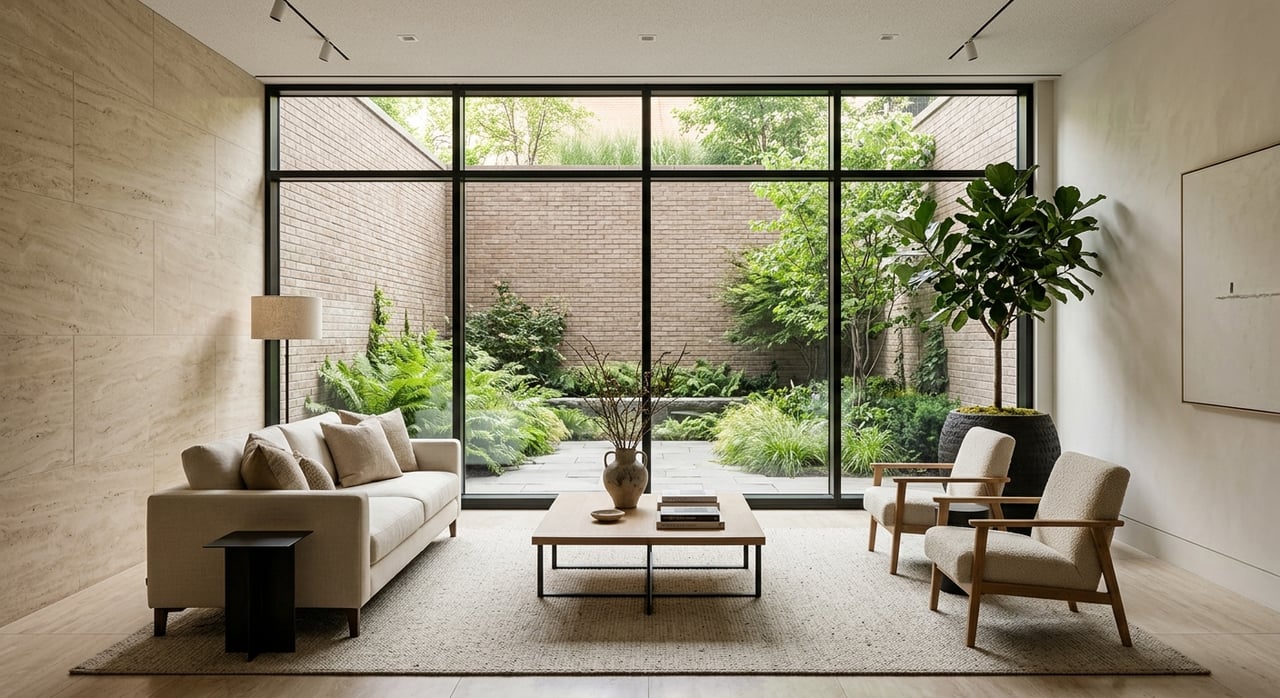
When you tour, pay attention to which rooms receive direct exterior light. A living room with full-height glass may look impressive, but if a bedroom or office relies on borrowed light through interior glass or openings, the unit may feel darker and less private than expected.
Ask yourself what the light looks like in the morning, mid-day, and late afternoon. Nearby towers can also cast major shadows, which can change how a unit feels and how much natural light you actually get.
WBDG notes that floor depth of no more than 60 feet has been shown viable for daylighting. That matters because deep units tend to have darker interior zones, especially when the layout pushes key rooms far from the exterior wall.
This is one reason corner units often feel better. They usually offer more perimeter wall, better daylight distribution, and a more open sense of space.
DOE guidance notes that east and west glass is harder to shade and can create uneven daylighting. In Downtown Austin, west-facing glass often deserves extra scrutiny because afternoon sun can create glare and heat gain that affects comfort.
South and north exposures are often easier to manage, but the details still matter. Well-designed shading and window placement can improve comfort, while a wall of glass without enough control can make a unit feel bright but harsh.
Use these questions when comparing units:
Privacy is easy to overlook during a fast showing. In a dense downtown setting, though, privacy often comes down to window placement, sightlines, and proximity to neighboring buildings.
The same geometry that shapes daylight also affects whether someone in another tower can see directly into your living room or bedroom. A view can be impressive and still come with uncomfortable exposure.
Stand near the main windows and look out, but also imagine the reverse view back in. If another tower is close, look for direct line-of-sight into the spaces where you spend the most time.
This matters most in living rooms, bedrooms, and work-from-home areas. Good design can balance openness and privacy, but not every building gets that balance right.
Amenities can help a building compete, but they are also common elements the association must operate, maintain, and eventually repair or replace. That means an amenity package is not just a lifestyle perk. It is also a budget item.
A rooftop pool, gym, or clubroom may add real value if residents use it regularly and if the building can support it financially. If the amenities are costly to maintain or poorly located, they can create more expense than benefit.
When touring a building, consider these questions:
In Texas condo purchases, HOA documents are some of the most important due diligence tools you have. Texas Property Code Chapter 82 makes the maintenance split especially important.
Unless the declaration says otherwise, the association is generally responsible for maintenance, repair, and replacement of the common elements, while each owner is responsible for the unit. Utility equipment serving only one unit may also be the owner’s responsibility.
Associations may adopt budgets for revenues, expenditures, and reserves, and assessments must be based on an annual budget. That means low monthly dues do not automatically signal a better deal.
In some cases, low dues can mean reserves are being underfunded or common-element work is being pushed off. A building that looks financially lean today may become more expensive later if repairs catch up all at once.
Texas law requires associations to keep detailed financial records, plans and specifications, board and association meeting minutes, and an annual independent audit. A unit owner can request access in writing, and the association generally must make records available within 10 business days, or within 15 business days if more time is needed.
For you, those records can reveal whether the building is planning ahead or reacting late. They can also help you spot deferred maintenance, pending disputes, or governance issues before you close.
For a resale condo in Texas, the resale certificate is one of the most useful documents in the file. Texas law requires it to be prepared no earlier than three months before delivery.
It must disclose items such as the current operating budget, restraints on transfer, unpaid assessments and fees, approved capital expenditures for the next 12 months, reserve amounts, insurance coverage items, pending lawsuits, and notices of building-code or health-code violations. In practical terms, it acts like a building-level risk snapshot.
If the project is new or newly converted, ask for the condominium information statement as well. Texas law requires that package to include the declaration, bylaws, association rules, copies of required closing documents, a projected budget, and a summary of any development rights reserved by the declarant.
This is especially relevant in Downtown Austin, where newer and still-evolving projects may have a different risk profile than long-established towers. A phased development can look polished today while still carrying future operational unknowns.
Use this list as part of your due diligence:
Condo insurance can be confusing because responsibility is split between the association’s master policy and your own unit policy. The Texas Department of Insurance says condominium insurance covers your personal property and the interior of your unit, plus liability and additional living expenses.
The key is to confirm exactly where the association’s responsibility ends and your HO-6 coverage begins. If those two policies do not fit together cleanly, you could end up with gaps you did not expect.
Financing a condo is not only about your income, credit, and down payment. It can also depend on the project itself.
HUD says FHA condo approval depends on factors such as insurance coverage, financial condition, nature of title, pending legal action, and physical property condition. Fannie Mae also notes that project review is separate from borrower underwriting and the unit appraisal.
If a building has project-level issues, you want to know that before your contract becomes difficult to unwind. In practice, this means your lender should start reviewing the condo project early, not at the last minute.
This is one of the biggest differences between buying a condo and buying a detached home. A strong borrower can still run into trouble if the building does not meet lending standards.
Some condo questions are easy to answer during a showing. Others require a deeper read on documents, systems, or design performance.
For Downtown Austin condos, it often helps to involve the right professionals early:
That last point matters because daylight and envelope performance are integrated design issues. Orientation, window placement, shading, and building systems all work together, so surface-level impressions are not always enough.
When you narrow your shortlist, compare each building across the same categories rather than relying on instinct alone. A simple scorecard can help you stay objective.
Look at:
A condo that wins on all ten categories is rare. Usually, the goal is to understand the tradeoffs clearly enough to choose the building that fits your priorities and budget with fewer surprises later.
Downtown Austin offers a wide mix of condo options, from established towers to newer projects still finding their footing. As inventory expands, buyers have more choice, but they also have more variables to sort through.
That is why a design-informed, document-driven approach works so well here. When you evaluate a condo building based on light, layout, privacy, maintenance responsibility, financial health, insurance structure, and financing risk, you move from guessing to knowing.
If you want help comparing Downtown Austin condo buildings with a sharper eye for design, construction, and due diligence, reach out to Ed Hughey.
Stay up to date on the latest real estate trends.
Working with Ed means partnering with a real estate professional who brings a strategic, design-informed approach to buying and selling homes in Austin. As a licensed Realtor with a deep understanding of residential construction, renovation potential, and city code, Ed helps clients identify value, assess opportunities, and make confident, informed decisions in a competitive market. Known for clear communication, honest guidance, and strong negotiation, Ed is committed to protecting his clients’ interests while delivering a seamless, results-driven real estate experience from start to finish.