South Austin Investment Property Guide for 78704
June 11, 2026
June 11, 2026
If you are hunting for value-add potential in 78704, you already know the easy deals are rare. South Austin is a high-value market, and in neighborhoods like Travis Heights and Bouldin Creek, upside often comes from smart layout decisions, zoning fit, and site constraints rather than a simple cosmetic update. The good news is that if you know what to look for, you can spot opportunities with more clarity and avoid properties where the numbers look better on paper than they do in real life. Let’s dive in.
In 78704, you are not evaluating generic housing stock. You are looking at a mature, central-South Austin area with older homes, mixed architectural styles, and a built form that often rewards thoughtful reconfiguration over teardown thinking.
That matters because the local housing pattern changes how value is created. In many cases, the best upside comes from improving function, adding legal density, or making the site work harder without fighting the existing neighborhood form.
Census Reporter places 78704 at 50,688 residents, with a median household income of $106,897 and a median owner-occupied housing value of $916,100. A recent Redfin snapshot shows a median sale price of $844,975 and about 91 days on market. Those are different measures, but together they support the same point: this is an expensive market where mistakes in renovation scope can get costly fast.
The first question is simple: Can the site legally support your idea? In Austin, zoning controls height, setbacks, building coverage, impervious cover, and bulk rules like FAR. On top of that, overlays, neighborhood plans, combining districts, and historic layers can change what is actually possible.
Before you underwrite any upside, check the property’s base zoning and whether there are extra layers that affect development. Austin’s Property Profile and Historic Property Viewer are key starting points because they help you confirm whether the path is straightforward or more constrained.
If your plan involves an ADU, Austin says the property generally needs SF-1, SF-2, or SF-3 zoning and at least 5,750 square feet of lot area. Each new unit also needs a unique address, and while zoning no longer requires minimum separation between units, deed restrictions can still affect feasibility.
Austin’s HOME amendments reshaped what buyers and investors should look for in single-family areas. The city now allows up to three housing units on SF-zoned property, which can materially change the value-add story on the right lot.
For duplex, two-unit, and three-unit residential uses, Austin states that maximum building coverage is 40% and maximum impervious cover is 45%. Garages and carports count toward those limits, which is important in older South Austin neighborhoods where access and parking can already be tight.
This is one reason 78704 value-add requires more than excitement about density headlines. A site may support more units in theory, but if coverage, access, parking layout, trees, or drainage issues work against you, the practical upside can shrink quickly.
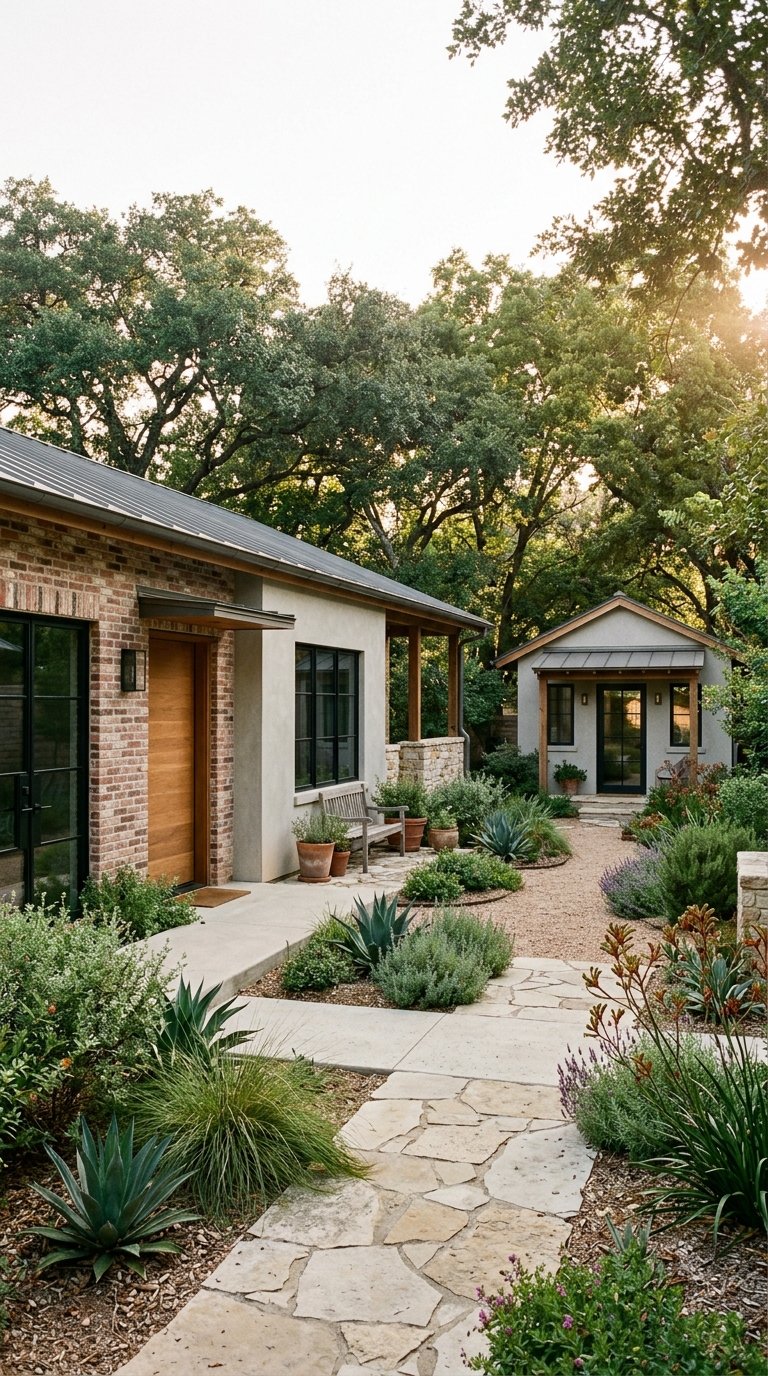
In 78704, a common value-add pattern shows up again and again: rear-lot additions and reconfiguration. Historic review examples in Travis Heights include older homes paired with rear-placed ADUs and even third-unit cases, which suggests that keeping the front structure more intact while adding at the back can be a productive strategy.
That pattern also fits the physical character of South Austin. In areas like Bouldin Creek, the housing stock is largely one-story, with simple forms, narrow and unobtrusive driveways, and relatively few garages or carports.
For you as a buyer or investor, that means circulation matters. If the lot has workable rear access, room for a clean addition strategy, and a front house that can remain functional and visually coherent, you may have a stronger candidate than a property that only looks promising because of square footage.
A pretty kitchen does not create true value-add by itself. In 78704, some of the best opportunities come from homes with inefficient layouts, undersized baths, awkward circulation, or underused rear yard areas that could support a better plan.
When I evaluate a property’s upside, I look closely at a few basics:
This is where architectural thinking helps. A house with average finishes but strong reconfiguration potential can be more compelling than a recently updated home with a locked-in layout and no realistic path to improve utility.
Historic status does not always kill value-add potential in 78704, but it can change the type of project that makes sense. In Austin’s local historic districts, exterior changes to contributing properties and all ground-up construction require review.
That review process tends to focus on compatibility, including massing, placement, and roof form. In practical terms, a property in a historic layer may still support a rear ADU, detached rear unit, or addition, but the design approach has to fit the standards.
There can also be benefits. Austin says contributing rehabilitations in local historic districts may qualify for a city tax abatement equal to 100% of city property taxes on the added value for 7 to 10 years. So if a property sits in a historic district, the right play may be preservation-led rehab rather than maximum build-out.
One of the most common mistakes in 78704 underwriting is over-focusing on interior renovation while underestimating site logistics. In older South Austin neighborhoods, narrow driveways, rare garages, and modest lot configurations mean access can become the real limiting factor.
If your value-add plan depends on adding a unit, expanding living area, or improving function, you need to understand how the site handles movement and coverage. Garages and carports count toward building coverage and impervious cover under current Austin rules for duplex, two-unit, and three-unit residential uses.
That can create real tradeoffs. A site may have room for more enclosed area, but not enough flexibility to solve access, parking, and outdoor space in a way that still feels livable.
If your numbers depend on short-term rental income, verify that early. Austin says ADUs can be used as short-term rentals only under the city’s licensing rules, and if an ADU was built after October 1, 2015, it may not be used as an STR for more than 30 days in a calendar year.
That is a major underwriting point. If the income story only works because you assumed broad STR use, the upside may not be real.
In many cases, a better thesis is long-term livability, legal density, or improved usability of the property. In a market like 78704, those are often sturdier value drivers than a speculative rental assumption.
If you want a fast way to sort promising properties from risky ones, start here. A strong 78704 candidate usually clears four early screens:
Zoning and lot size fit the plan
The lot needs to support the intended use under current Austin rules.
The building envelope can absorb change
There should be room for a meaningful layout improvement, addition, or rear-yard strategy.
The site works physically
Access, parking, drainage, and tree constraints should not erase the upside.
No hidden regulatory layer breaks the deal
Historic review, deed restrictions, overlays, or neighborhood-specific rules should be checked before you get attached.
This framework will not replace full due diligence, but it can help you quickly separate a real opportunity from a property that only sounds promising in a listing description.
The most attractive value-add properties in South Austin usually have a few things in common. They are not always the cheapest homes, and they are rarely the most polished.
Instead, they often offer some mix of the following:
That last point matters. Every 78704 property comes with tradeoffs. The goal is not to find a perfect site. It is to find a site where the tradeoffs are legible, manageable, and priced correctly.
In a neighborhood where older homes sit on valuable land, the best decisions usually come from seeing both the market story and the building story at the same time. Price per square foot alone will not tell you whether a house has good bones, whether a rear addition will feel natural, or whether a renovation budget will actually create durable value.
That is especially true in 78704, where neighborhood character, site constraints, and Austin’s rules all shape what is feasible. A calm, design-informed review can help you avoid over-improving the wrong property and identify the one where layout, zoning, and livability line up.
If you are evaluating a fixer, a second-home purchase, or a property with ADU or multi-unit potential in South Austin, a more disciplined first pass can save you time and protect your downside. If you want help assessing the real upside in a 78704 property, Ed Hughey can help you think through design, feasibility, and negotiation with a clear local lens.
Stay up to date on the latest real estate trends.
Working with Ed means partnering with a real estate professional who brings a strategic, design-informed approach to buying and selling homes in Austin. As a licensed Realtor with a deep understanding of residential construction, renovation potential, and city code, Ed helps clients identify value, assess opportunities, and make confident, informed decisions in a competitive market. Known for clear communication, honest guidance, and strong negotiation, Ed is committed to protecting his clients’ interests while delivering a seamless, results-driven real estate experience from start to finish.