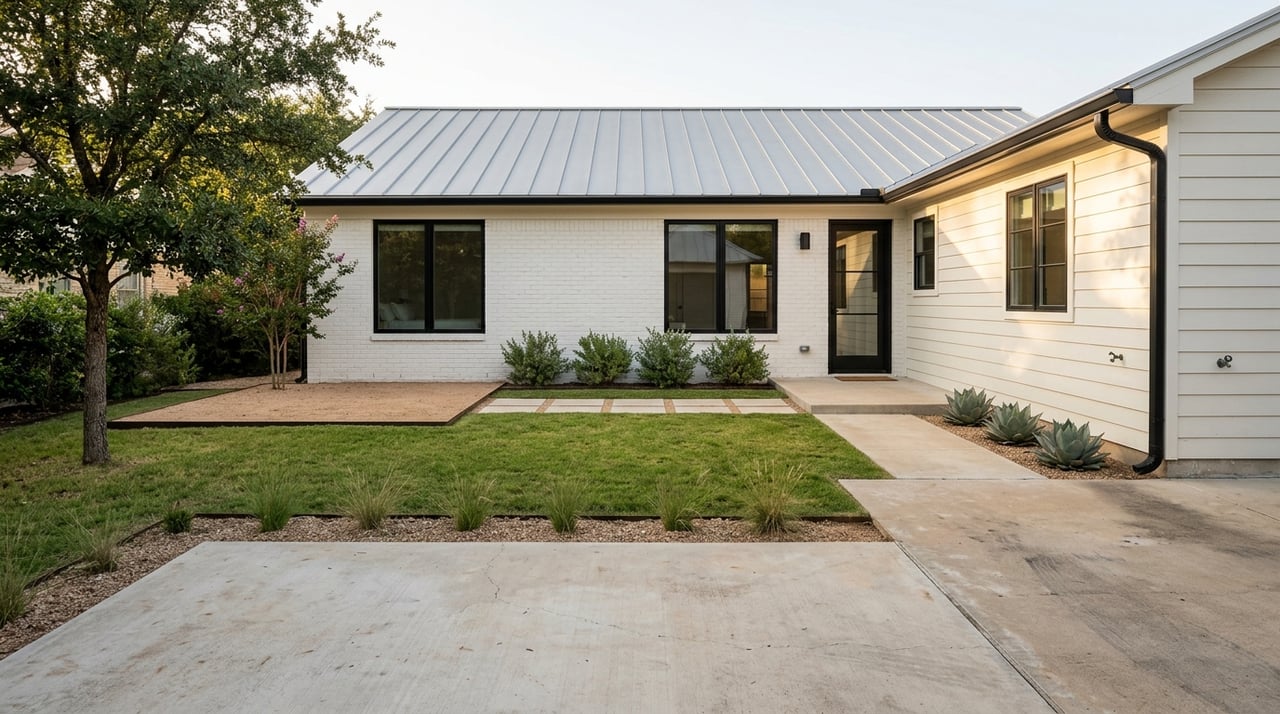
East Austin ADU Potential in 78723: What to Check
June 25, 2026
June 25, 2026
If you are looking at a lot in 78723 and thinking, “Could I add an ADU here?”, you are asking the right question early. In East Austin, a backyard can look generous on paper but shrink quickly once zoning, access, trees, drainage, and utility rules come into focus. This guide will help you understand what actually drives ADU potential on Austin lots, what to check before you write an offer, and where the most common surprises show up. Let’s dive in.
In Austin, an accessory dwelling unit is a separate dwelling on the same property as a single-family home. The city treats a structure as a dwelling unit if it has habitable space, a full bathroom, and a sink or dishwasher outside the bathroom.
That definition matters because not every detached garage or backyard building qualifies. Even if a structure already exists, it still has to meet zoning and city requirements related to utilities, internal access, occupancy, and addressing.
For a standard ADU analysis, Austin says an ADU may be built on SF-1, SF-2, or SF-3 property if the lot is at least 5,750 square feet. The city also notes that zoning no longer requires a minimum distance between units, though technical code requirements still apply.
The size of an allowed ADU is not one fixed number across the city. Austin’s guidance says required size depends on the zoning district and geographic location, so the answer is parcel-specific.
Austin’s HOME amendments changed what is possible on single-family zoned land. Phase 1 allows up to three housing units on SF-1, SF-2, and SF-3 property.
Phase 2 also created a small-lot path for lots between 1,800 and 5,749 square feet. That means a lot under 5,750 square feet may still have housing potential, but it is not the same as a standard ADU review.
For buyers in 78723, this is an important distinction. A lot that does not fit the classic ADU box may still deserve a second look, but the due diligence needs to be more precise.
A lot can meet the minimum area requirement and still be a weak ADU candidate. In practice, the usable buildable area is what matters.
Austin’s site-development rules and accessory-building standards shape how much of the lot can actually be used. For example, the current site-development table shows maximum impervious cover of 45 percent in SF-3, and the accessory-building rule allows a 5-foot rear yard setback for one-story, 15-foot-high accessory buildings in SF-1, SF-2, and SF-3 districts.
That sounds technical, but the takeaway is simple. You are not evaluating only square footage. You are evaluating the buildable envelope after setbacks and site limits are applied.
Access is one of the most overlooked parts of ADU feasibility. A backyard addition may fit on paper, but circulation, parking patterns, fence placement, and rear access can complicate the plan.
Austin’s subdivision rules say there must be a minimum setback of 10 feet between a rear access easement and a building or fence. The code also says lots less than 50 feet wide that front on a collector street must have a paved alley or paved private access easement along the rear property line.
In plain terms, narrow lots without rear access are often harder to organize well. Even when the lot area is technically sufficient, the site may be awkward once you map how people and vehicles move through it.
If a property has alley access, do not assume the access question is fully solved. Austin notes that alley access still requires approval from Residential ROW Review or the Land Development Engineering transportation reviewer.
In established East Austin areas, mature trees are often one of the biggest constraints. A yard may look open enough for another structure, but protected root zones can limit where you can build.
Austin’s City Arborist Program says a Tree Ordinance Review Application is needed when a project removes a tree, prunes 25 percent or more of the canopy, or impacts the critical root zone. Protected trees are 19 inches diameter at breast height and larger, and heritage trees have stricter protections.
This is a big reason why a visual walk-through is not enough. A lot may appear to have ADU potential until the tree impacts are studied more carefully.
Another common issue in 78723 is that the backyard you see is not always the backyard you can fully use. Austin’s land-use review categories include drainage, floodplain, water quality, transportation, environmental review, erosion control, and tree protection.
Floodplain is its own regulatory issue, and drainage can affect where and how a structure is placed. So if you are evaluating ADU potential, it helps to think beyond lot size and start asking how much of the rear yard remains practical after those site conditions are mapped.
This is where early feasibility work can save time and money. A parcel may look promising in photos or from the street, but the site constraints can tell a different story.
Many buyers look at a detached garage, workshop, or outbuilding and assume it can be converted. Sometimes that is possible, but Austin does not treat every accessory structure as a dwelling unit.
If the structure does not already include the required dwelling-unit components, it is not automatically an ADU. Austin specifically directs applicants with that kind of question to schedule zoning guidance when the answer is unclear.
That makes pre-offer evaluation especially important. A seller’s marketing description may mention a studio, garage apartment, or flex building, but you still need to confirm what the structure legally is and what would be required to convert it.
Buyers often focus on whether a building can physically fit. Just as important is whether the future dwelling can satisfy Austin’s utility-meter, internal-access, occupancy, and address requirements.
Austin requires a unique address or building number for each new dwelling unit. That means utility and addressing questions should be part of the early feasibility review, not a box to check at the end.
From a practical standpoint, this affects timeline and budget. A lot that works spatially may still require more coordination than expected once utility and addressing steps are added to the process.
If ADU potential is part of your reason for buying, try to verify the main site constraints before you get too far down the road. Austin points buyers and applicants to Property Profile and to its zoning and building question channels for general guidance.
A solid pre-offer review in 78723 should include:
The strongest ADU candidates are usually the lots where these factors line up at the same time. It is rarely about one magic number. It is about how the whole site works together.
Even when a lot looks favorable, that does not mean it is construction-ready. Austin’s permit path for an ADU includes creating an AB+C account, requesting a new address, submitting the residential building permit application, paying plan review and permit fees, activating the permit, completing inspections, and then receiving a certificate of occupancy.
That sequence matters because timing affects decisions on price, financing, and project planning. If you are comparing lots in 78723, one of the smartest questions is not just “Can I build?” but “How complex will this be to get through review?”
ADU analysis is part zoning review, part site planning, and part practical judgment. Two lots with the same square footage can have very different outcomes once you study access, trees, setbacks, existing structures, and drainage.
That is why pre-offer evaluation matters so much in East Austin. A design-informed review can help you see whether a lot’s apparent upside is real, limited, or likely to be more expensive and complicated than it first appears.
If you are weighing a purchase in 78723 and want a clear-eyed read on lot potential, buildability, and tradeoffs, Ed Hughey can help you assess the property with both market context and an architect’s perspective.
Stay up to date on the latest real estate trends.

Working with Ed means partnering with a real estate professional who brings a strategic, design-informed approach to buying and selling homes in Austin. As a licensed Realtor with a deep understanding of residential construction, renovation potential, and city code, Ed helps clients identify value, assess opportunities, and make confident, informed decisions in a competitive market. Known for clear communication, honest guidance, and strong negotiation, Ed is committed to protecting his clients’ interests while delivering a seamless, results-driven real estate experience from start to finish.